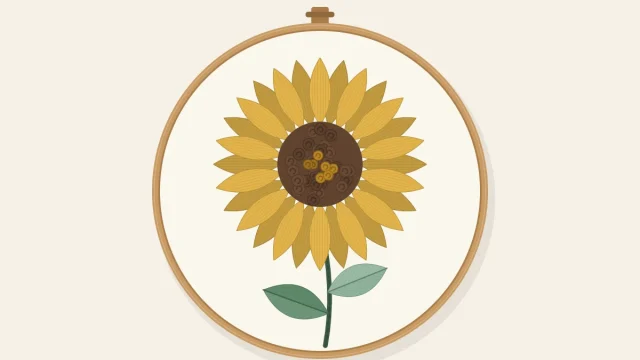
Easy Embroidered Sunflower With a French Knot Center
A single large sunflower with two offset rings of straight-stitch petals, a center packed with French knots, a thick stem and heart-shaped leaves, drawn from simple measurements.
Hand-embroidered flowers, step by step
Beginner-friendly hand embroidery tutorials for roses, daisies, lavender and wildflowers, with every stitch, thread count and step explained.
Never threaded an embroidery needle? Work through these four guides in order.
A hoop, woven fabric, cotton floss, needles, small scissors and a marking pen are enough to stitch a first flower. Here is what to choose for each and what can wait.
How to load fabric into an embroidery hoop so it stays drum-tight, choose between 4, 6 and 8 inch sizes, bind the inner ring and deal with hoop marks and slipping.
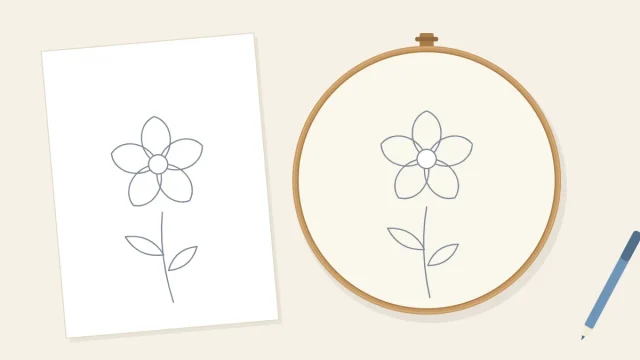
Three ways to get a drawn flower onto fabric: tracing over a light source, transfer paper and stick-on water-soluble stabilizer, with advice on which suits light or dark cloth.
Three daisies with straight-stitch petals, French knot centers and stem-stitch stems. The design is given with measurements so you can draw it straight onto fabric.
A single large sunflower with two offset rings of straight-stitch petals, a center packed with French knots, a thick stem and heart-shaped leaves, drawn from simple measurements.
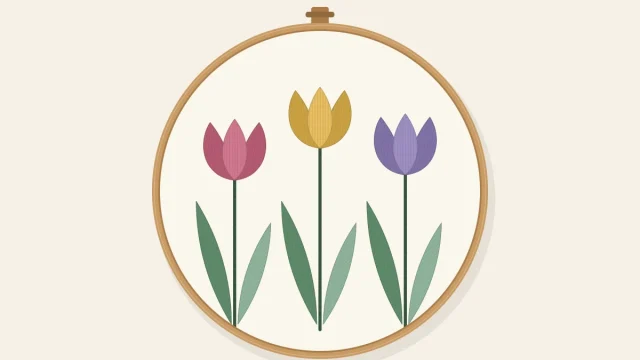
A tulip made from a three-petal satin stitch cup, a straight stem and two blade leaves. Draw the shape from the measurements given and stitch three in a row.
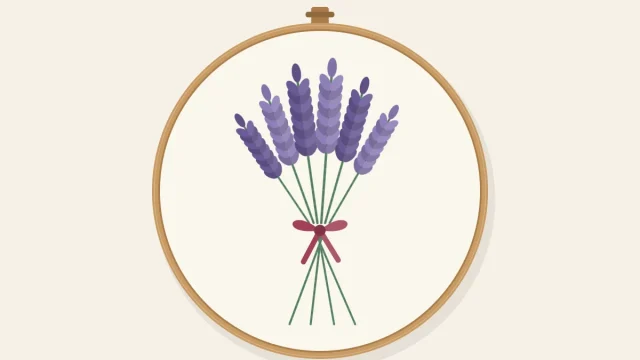
Five lavender sprigs made from stem stitch and pairs of short slanted stitches, gathered into a bundle and tied with a stitched bow. Measurements are included so you can draw the design yourself.
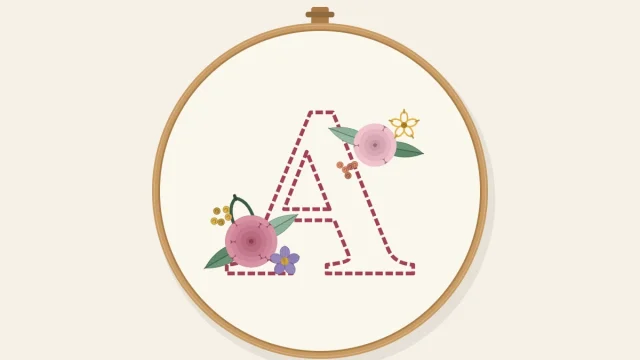
Draw a bold 3 1/2-inch letter, place two flower clusters at opposite corners, and stitch a floral monogram that can still be read from across the room.
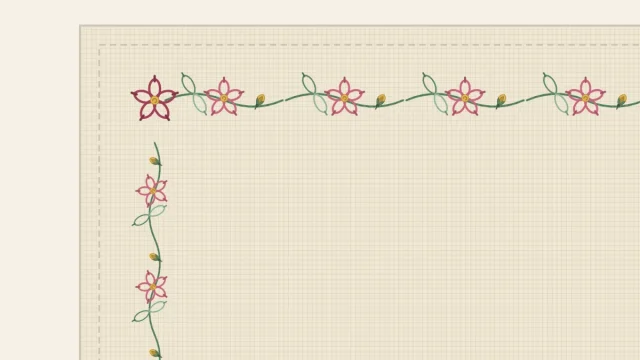
Draw a 2-inch repeat of a flower, a leaf pair and a bud, fit it to the edge of a napkin or towel with simple arithmetic, and turn the corners cleanly.
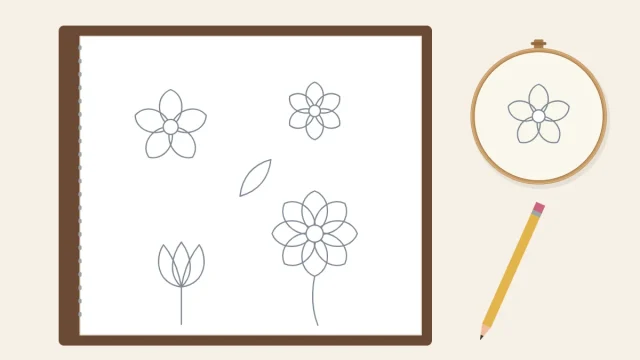
Build simple flower designs from circles and guide lines, turn one flower into front, side and bud views, and size every detail so it can actually be stitched.
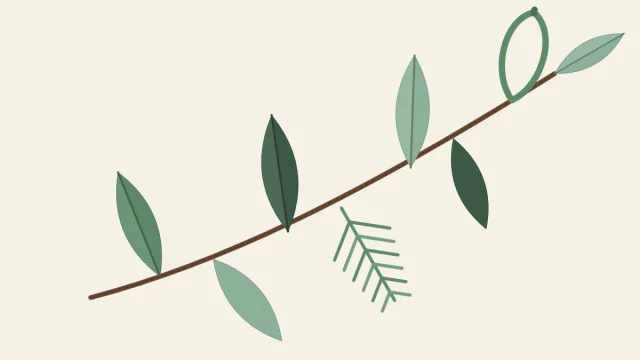
Fishbone stitch fills a leaf and forms its center vein at the same time. Learn the stitch in three stages, then compare it with satin, fly-stitch and lazy daisy leaves.
The woven wheel stitch turns five spokes and one long thread into a raised rose. Here is how to space the spokes, weave over and under, and judge tension and size.
How to fill flower petals with satin stitch: outline in split stitch, start in the middle, keep the angle steady and know when a petal is too long for it.
Stem stitch makes a rope-like line for flower stems and curved outlines. Learn the steps, why the thread stays on one side, and how to handle curves and joins.
How to make a French knot that stays on the surface: wrap twice, hold the thread taut and go down beside the starting point. Includes sizing and fixes.
The lazy daisy, or detached chain stitch, makes a petal from one loop and one tacking stitch. Learn the steps, how tension shapes the loop, and how to space a flower.
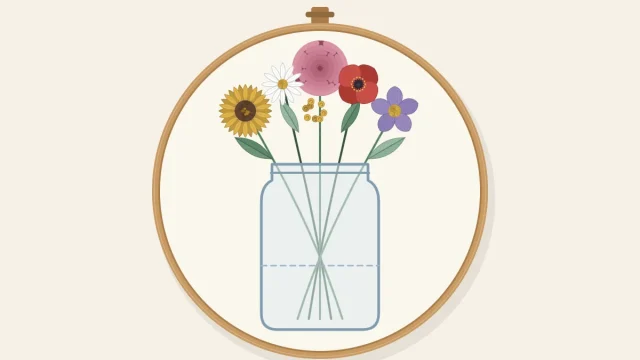
Draw and stitch a simple glass jar with stems showing through the glass, then fill the top with roses, daisies and flower spikes at varied heights.
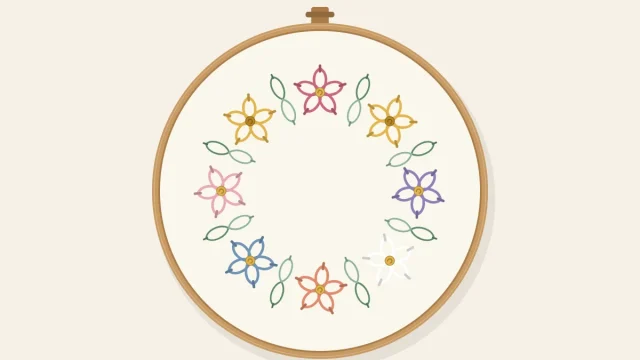
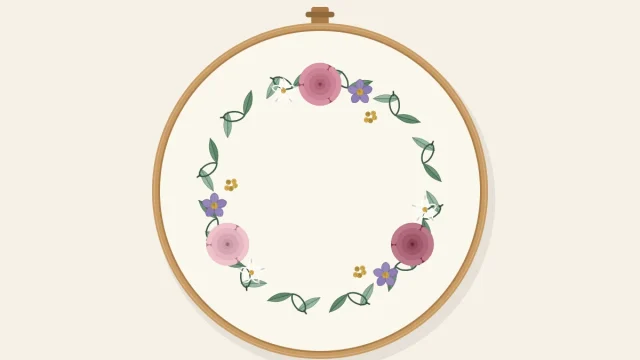
Draw a 4-inch guide circle, place three flower clusters at clock positions, and fill between them with leaves that all grow in the same direction.
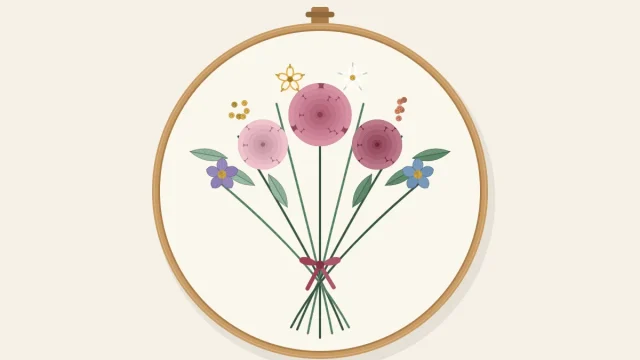
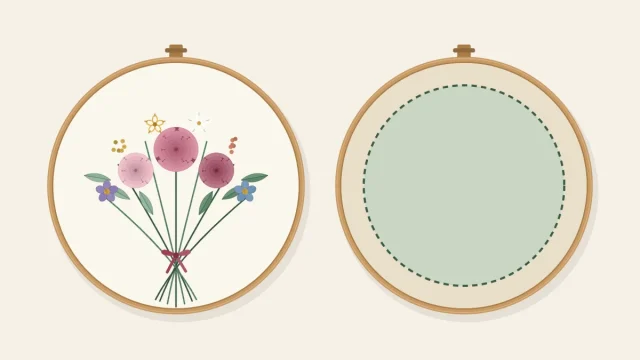
Plan a hand-tied bouquet around three focal flowers, add medium flowers and fillers, cross the stems at the tie and finish with a stitched bow.
Rinse out the marks, press face down on a towel, re-center the fabric, then trim and gather the back so the hoop becomes the frame.
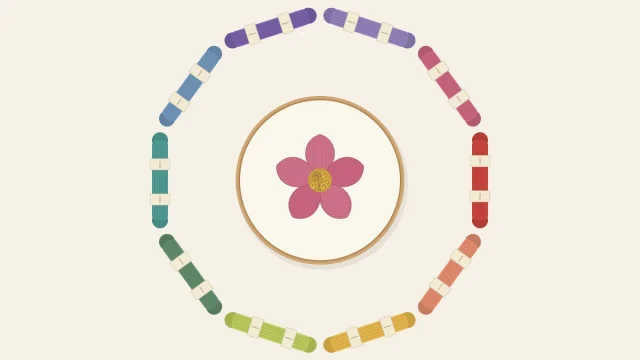
A practical way to pick thread colors for stitched flowers: one main color with a light and dark, quiet greens and a small accent, checked against the fabric before stitching.
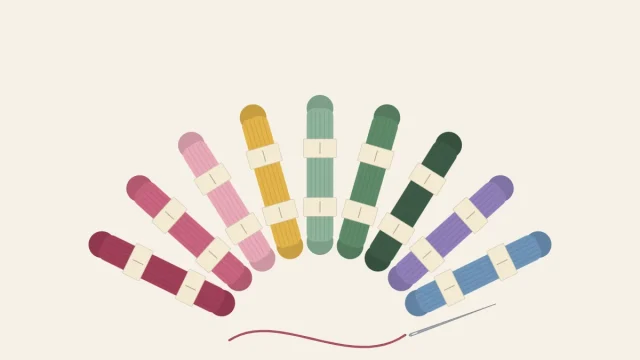
How six-strand cotton floss differs from perle cotton, how to separate strands without tangles, how many strands to use for each effect, and how to test and store thread.
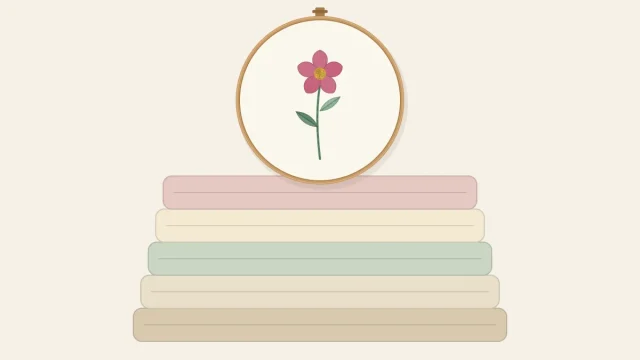
Medium-weight woven cotton, linen and cotton-linen blends make the most reliable ground for hand embroidery. This guide covers weave, weight, prewashing, ground color and how big to cut.
Three ways to get a drawn flower onto fabric: tracing over a light source, transfer paper and stick-on water-soluble stabilizer, with advice on which suits light or dark cloth.
How to load fabric into an embroidery hoop so it stays drum-tight, choose between 4, 6 and 8 inch sizes, bind the inner ring and deal with hoop marks and slipping.
Rinse out the marks, press face down on a towel, re-center the fabric, then trim and gather the back so the hoop becomes the frame.
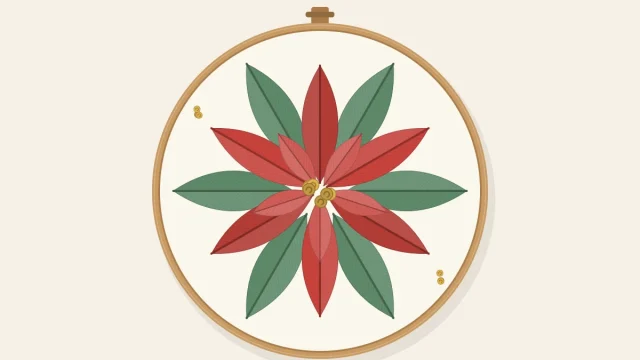
Stitch a poinsettia in three layers: green leaves at the back, six large red bracts over them, and five smaller bracts with gold French knots on top.
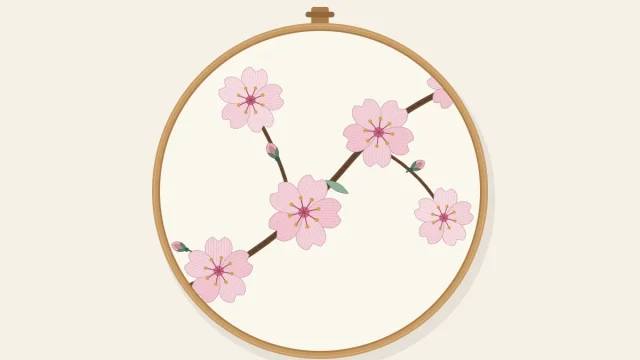
Stitch a spring branch with a kinked brown stem-stitch bough, five-petal blossoms with notched satin-stitch petals, fine stamens tipped with knots, and deep pink buds.
Draw and stitch a simple glass jar with stems showing through the glass, then fill the top with roses, daisies and flower spikes at varied heights.
Draw a 4-inch guide circle, place three flower clusters at clock positions, and fill between them with leaves that all grow in the same direction.
Plan a hand-tied bouquet around three focal flowers, add medium flowers and fillers, cross the stems at the tie and finish with a stitched bow.
Start with a simple daisy, learn one stitch at a time, and work up to roses and full bouquets at your own pace. Every tutorial on the site is free to read, no sign-up needed.